
Why Offline Access in CRM Is a Game-Changer for Field Teams

Amiga Cloud CRM’s offline access boosts pharmaceutical field teams’ productivity by enabling uninterrupted data logging, sales tracking, and client management despite connectivity issues, enhancing efficiency and performance.
Quick Tips for Planning Smarter Sales Routes with Amiga Cloud

Amiga Cloud streamlines pharmaceutical sales route planning with CRM and automation, boosting efficiency, client visits by 30%, and data management, offering a free trial and exclusive insights.
Unlock the Power of Customizable CRM Tools for Your Industry

Amiga Cloud’s customizable CRM offers pharmaceutical sales teams real-time data, automation, and route planning tailored to their needs, boosting efficiency, reducing errors, and enhancing productivity.
A Day in the Life: Transforming Pharma Sales with Amiga Cloud CRM

Amiga Cloud CRM streamlines pharma sales with smart automation, real-time data, efficient route planning, offline capabilities, and performance tracking, boosting reps’ productivity and sales success.
Geo-Location in CRM: A Necessity for Field Sales and Medical Representation? (pros and cons)

Introduction In the field sales and medical representation industries, geo-location has become a common feature in many CRMs, offering teams new ways to manage their operations more effectively. But is it a true necessity? With geo-location, field reps’ visits are accurately logged, ensuring accountability and operational insights. However, not everyone is enthusiastic about this level of tracking. In this post, we’ll explore both sides—the benefits and the concerns—of geo-locating visits within a CRM. Plus, we’ll dive into how AMIGA Cloud uses geo-location to support field teams, with features like proximity verification and location data for customer continuity. The Pros of Geo-Location in CRM The Cons of Geo-Location in CRM Is Geo-Location Worth It? For many organizations, the benefits of geo-location in a CRM outweigh the potential downsides, particularly when using a solution like AMIGA Cloud that emphasizes accuracy and continuity. Proximity-based visit validation, for example, ensures visits are genuine, while the ability to seamlessly transfer accounts across team members makes it easier to manage turnover. That said, it’s essential to implement geo-location thoughtfully, respecting team members’ privacy and creating a balance that fosters trust. When used wisely, geo-location can be an invaluable tool for improving efficiency and accountability in field operations. Closing Thoughts Geo-location has transformed how field teams operate, enabling companies to optimize their strategies, maintain customer continuity, and ensure accurate reporting. AMIGA Cloud integrates this feature thoughtfully, with proximity validation and continuity support, making it a tool for empowering—not monitoring—your field team. Curious about how AMIGA Cloud can support your team’s needs? Follow us on LinkedIn for more insights and updates on CRM innovations.
The Importance of Offline Visit Punching Mobile Apps for Sales and Medical Representatives

Introduction In today’s fast-paced business world, sales representatives, especially medical sales representatives, face unique challenges. These professionals are constantly on the move, meeting clients, healthcare providers, and customers to promote their products and services. Managing and tracking these interactions is crucial for sales success, and this is where offline visit punching mobile apps come into play. In this article, we will explore the significance of offline visit punching mobile apps for both sales representatives and medical sales representatives. Accessibility and ConvenienceOne of the key reasons why offline visit punching mobile apps are indispensable for sales representatives is their accessibility and convenience. These apps allow representatives to access critical information, schedules, and client details at their fingertips, even when they are in remote or offline areas with limited connectivity. Medical sales representatives often visit healthcare facilities and clinics located in rural or remote areas where internet connectivity may be unreliable. Having a mobile app that works offline ensures they can record and access essential data whenever and wherever they need it. Data Accuracy and ReliabilityFor sales professionals, accurate and reliable data is the backbone of their success. Offline visit punching mobile apps ensure that data is recorded in real-time, reducing the risk of data loss due to connectivity issues. Medical sales representatives can record interactions with healthcare providers, prescribe product information, and even take orders while offline. This data is then synchronized with the central system when an internet connection is available, ensuring that nothing gets lost in transit. Enhanced ProductivitySales representatives’ time is valuable, and offline visit punching mobile apps help boost productivity. These apps allow them to streamline their workflows, eliminating the need for manual data entry and paperwork. For medical sales representatives, this means spending more time engaging with healthcare providers and potential clients, rather than getting bogged down with administrative tasks. Improved productivity translates into more meaningful interactions and ultimately, increased sales. Real-time InsightsOffline visit punching mobile apps are not just data storage tools; they also provide real-time insights. Sales representatives can access up-to-date information about client preferences, purchase history, and current market trends while on the field. For medical sales representatives, this means being better equipped to tailor their pitches and product offerings to the unique needs of healthcare providers. Compliance and AccountabilityRegulations and compliance standards are especially crucial in the pharmaceutical and healthcare industries. Offline visit punching mobile apps help sales representatives maintain compliance by recording interactions and communications accurately. This accountability not only ensures that representatives adhere to industry regulations but also builds trust with clients and healthcare providers. Cost ReductionThe implementation of offline visit punching mobile apps can lead to cost reduction for organizations. By reducing the need for physical paperwork and streamlining administrative processes, companies can cut down on operational costs and improve their bottom line. Moreover, sales representatives can save on travel and printing expenses, further contributing to cost reduction. ConclusionIn conclusion, it is evident that offline visit punching mobile apps provide a significant advantage over online-only systems. The advantages of offline accessibility, data accuracy, enhanced productivity, real-time insights, compliance, and cost reduction make offline mobile sales a superior choice for sales representatives and medical sales professionals. Amiga-Cloud, with its offline capabilities, exemplifies the excellence of this approach, empowering sales teams to excel in their fieldwork. In today’s digital age, the offline mobile sales approach has proven to be not just valuable but better than relying solely on online systems.
The Importance of an In-Store Retail Audit

How to Implement the Best Retail Audit As the retail market continues to grow around the world due to increased income, awareness, accessibility and lifestyle changes, it is important that businesses develop tailored strategies for their markets. For brands selling outside their home country, it is critical to understand the unique challenges every market poses as a result of different economic, political and cultural environments. Unfortunately, most brands lack an adequate data source and instead rely on information delivered from unreliable, third party companies that fail to provide actionable insights and data verification. In order for your business to increase revenue, profit share and market share, accurate data about on-the-ground conditions is critical to understand the true barriers to growth and create effective strategies that address these barriers. What is a Retail Audit? A retail audit is like a wellness check for your brand in the marketplace. Retail audits collect supplier data like: out of stock (OOS), visual merchandising, planogram compliance, competitive information and more. The result of a retail audit is a report card providing valuable insights into your brand’s overall health in store. Did you know that a mere 8% of consumers identify as a brand or product loyalist? Gone are the days of brand loyalty; “brand switching” is the new consumer trend. With an overwhelming array of options for even the most menial purchases, consumers tend to venture towards brands with a seamless or enjoyable customer experience. A robust retail audit program allows your business to collect on-the-ground store data unveiling and dissecting any barriers to growth and creating viable strategies to address and remove these barriers. Historically, retail audits were executed by a brand representative or multiple brand representatives and completed with a handy-dandy pen and paper. This approach is inefficient and time-consuming, not to mention challenging and a massive drain on resources. Gratefully, technological advancements paved the way for valuable resources like crowdsourcing, which provides an accurate and efficient method of retail data collection. Crowdsourced retail audits leverage a massive network of global contributors to collect data in real-time. This on-the-spot data collection provides the actionable insight necessary to help your brand optimize retail capabilities and scale locally, nationally or globally. Retail Audit Checklist There are four key categories of data your business should collect during a retail audit: location, demographic, in-store and competitive. These data pillars will ensure your business gathers the intelligence needed to improve customer experience on location. Location DataInformation gaps are common in emerging markets due to insufficient resources on-the-ground. Location-based data collection provides peace of mind by ensuring accurate communication regarding product distribution, merchandising, compliance and more. Demographic DataDemographic data like neighborhood descriptions, store conditions and street view can help your brand paint a more holistic view of the physical location in which your products are distributed. In-Store DataIn-store data is the true bread and butter of a retail audit with information regarding product placement, share-of-shelf, inventory levels, merchandising quality, planogram compliance and product location. Competitive InformationData assessment of a competitor’s performance in-store provides a benchmark from which to analyze your brand’s performance. it is so easy to create an audit check list with AMIGA-CLOUD Why are Retail Audits Important? If successfully executed, retail audits can maximize sales, increase market share, ensure retailers are compliant with your merchandising requirements and optimize the customer experience in-store. Maximize Sales and Market Share Real-time retail audit data allows businesses to make rapid adjustments to planograms, merchandising and shelf location based on consumer feedback. In addition, competitive information by way of retail audits empowers teams to make agile decisions based on predictive behavior and competitive trends. These retail audit “perks” optimize sell-through and expand market share as a result of adept movement in the marketplace. Ensure Retail Compliance Marketing and sales teams labor arduously over planograms, merchandising, signage and more, yet lack of planogram compliance alone loses U.S. retailers between $1 to $30 million in sales individually. Retail audits examine retail compliance with placement, pricing and promotional agreements. Compliance ensures your business can effectively measure the success or failure of particular campaigns, SKU arrangements, marketing signage and more. Optimize Customer Experience According to Smart Insights, 86% of customers will spend more on a product or service that is accompanied with a pleasurable customer experience. In a sea of seemingly endless choices, quality customer experience can elevate your brand. Retail audits help brands measure and monitor retail success by analyzing the shopper’s experience with your products in-store. Using a retail audit, your brand can identify the time it takes to find your products on shelf, the helpfulness of store employees, the scarcity or abundance of stock and more. Like with most things, the quality of data collected plays a significant role in its effectiveness. Taking an insights-driven approach allows teams to optimize sales and marketing efforts. Global Brands Uses AMIGA-CLOUD Solution Most brands have very little in-store product data, especially in emerging markets. The lack of data is often a result of fragmented distribution value chains that are typical in these markets. One company came to Amiga-cloud with trouble gathering product data post-distribution. See how Premise was able to help this global brand get the ground-level insights they needed. Is Your Visual Merchandising Meeting Your Standards? In the battle to win over customers, you may implement a robust marketing strategy including display graphics, fashionable mannequins, floor displays, mood lighting, pre-selected music or even a signature scent. “Visual merchandising” includes a wide array of strategies that are not always visual, but play a huge factor in landing that customer. With physical retail continuing to battle e-commerce, retailers and brands alike need to do everything they can to entice the customer to make a purchase. Visual merchandising is one powerful way that brands and stores can pique consumer interest. But, how do you know if your visual merchandising efforts are effective? Regularly monitoring your visual merchandising is a critical tactic to understand the full impact of your in-store marketing strategy. Premise retail audits can help you
7 Benefits of Customer Relationship Management in Pharma

In various industries, CRM systems help to keep track of customers and maintain relationships with them easily. The role of Custom Relationship Management is especially important for pharmaceuticals. Small and large pharma companies need to manage data effectively and face various challenges on a daily basis. Why CRM in the pharmaceutical industry is so important? How can your company benefit from this solution? Finally, what is the top CRM software? You will find out the answers in the text. What is Pharmaceutical CRM Software? Speaking of benefits a CRM software in pharma is a solution that can drive your success in the fast-changing market. However, taking a more practical approach we will explain to you what Customer Relationship Management is and how it works. Pharmaceutical CRM is a tool that can help your company to adhere to compliance requirements, complete sales campaigns, gain sales and marketing efficiency, and monitor relationships with customers or employees efficiently. It is a complex digital solution, and it opens up lots of opportunities for the pharma industry. Whether you run a small or large business, automated processes, integration with industry databases, or activity tracking are just a few of the benefits that a CRM can bring to your company. What type of CRM is used in the pharmaceutical industry? We can singularize a few types of CRM used in pharma. You can choose from them according to your needs. To increase your company’s work effectiveness, even more, combine different types of CRM systems. Each of them provides unique functionalities. Let’s see what are the most common types of CRM tools. Operational CRM – this type is usually the most beneficial for the front office team. By capturing data from customers, it helps manage and automate sales, marketing, and service processes. Analytical CRM – this type analysis customer data that can be helpful in market campaigns and customer data management. Sales Intelligence CRM – this type of CRM sends alerts to the sales team on sales performance, customer trends, margins, and alignment. Collaborative CRM – this type improves the quality of service delivery by compiling the information collected from various departments. Campaign Management CRM – this type allows combining the data from the operational and analytical CRM. If you manage a pharmaceutical company, a CRM system is a must. It is entirely up to you which one you will choose or whether you decide to combine a few of them. Moreover, if you find presented CRM types insufficient for your needs, you can always develop a custom CRM tailored to your specific requirements. And if you are looking for someone to guide you on that matter – feel free to contact us to estimate the project. How can the pharma industry be benefited by implementing CRM? Implementing a Customer Management Relationship system can bring many benefits to any company in the pharmaceutical industry. Let’s see what they are. Automated Processes Automation is visible in almost every industry and every sphere of our lives. No wonder it benefits the pharma industry too, and it does on many levels. For example, you get to import data from various sources in just one click. It gives you a handy pack of useful viewpoints for your sales team and their cooperation with distributors or pharmacy employees. With such a complex view, you can quickly analyze your results and adapt to current market trends. Automated processes are very useful in creating a drug database with detailed descriptions of each of your products. Collecting all this data in one system enables you to manage pricing and plan better sales strategies. Also, intelligently automated lead assignments can streamline the process of lead management. A CRM can automate scheduling visits according to the real-time demand and physician’s availability and provide you with sales automation tools. As a result, you get to maximize the effectiveness of your company’s overall workflow. Integrated Customer Database It would be a tiring and challenging task to take care of all the bureaucracy on paper. It would be inefficient too. Implementing the right CRM will solve all your problems with unorganized data. With a CRM, you will collect and store customer data and regain it to take appropriate action. If you have an internally developed IT infrastructure choose a CRM that will allow you to interexchange the data between your system and the new tool. Thus, you create a new potential for data analysis. Enabling a connection between all your company’s systems and departments will streamline the overall workflow. Everyone entitled will have access to the relevant data when they need it. Also, data navigation, analysis, and planning future sales and marketing strategies will turn out to be much easier. Customer Journey Tracking To make sure you provide your clients with satisfactory products and services, you should track their activity, document their experiences, and let them interact with your brand. And what a better way to do so than with a CRM system. With a Customer Relationship Management tool, you will manage the customer database and offer customized services. You will see clearly what your customers require and how to answer those needs. Account and contract management tools in the CRM allow discovering when a client is unhappy or, on the contrary, interested in an upsell or cross-sell. Based on the customer’s journey, you get access to the customer’s interactions and communication history. With such a wide range of data, you will adapt your services to be adequate and proactive to consumer demands. Enhanced Customer Engagement It is a good idea to engage your customers in marketing and sales strategies in the pharmaceutical industry. Such an approach can help you stay ahead of the competition. Based on a CRM innovative plan allows you to know your customers’ wishes, reduces the number of resources, and saves your valuable time. Customers are very willing to cooperate. By involving them in sales and marketing processes, pharmaceutical companies get an improved view of what works and what doesn’t. Clients eagerly share the data
Ways to Get Your Employees to Use CRM Software
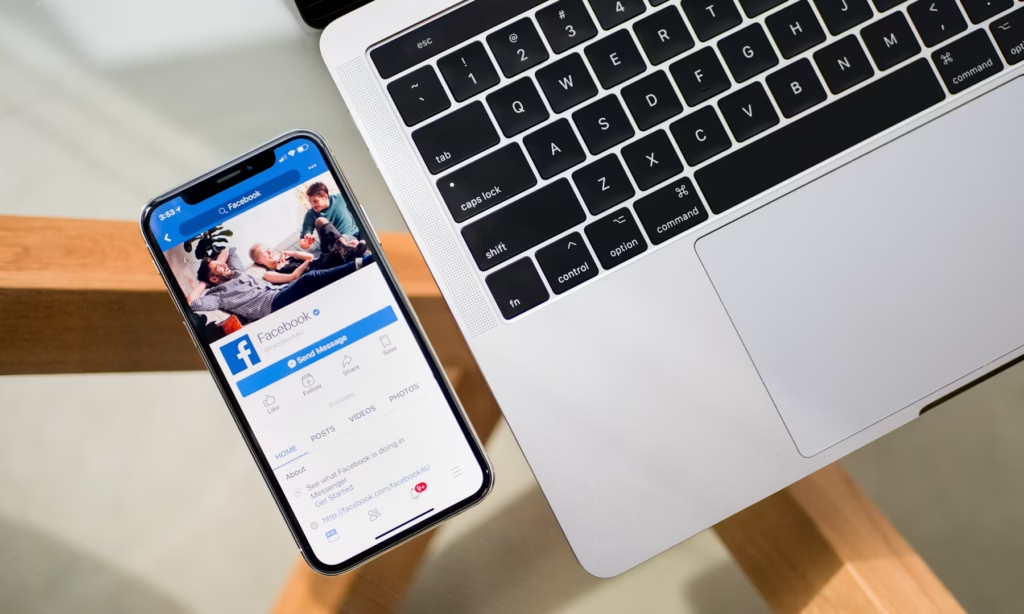
A guaranteed way to increase your company’s sales is to have a system in place to manage your sales activities. Having a custom relationship management (CRM) system that is easy and gets used by the sales team is a great step towards that goal. Businesses are constantly facing the challenge of convincing sales teams to adopt CRM as the daily vitamin for their sales routine. The sales force is likely already aware that CRM is a valuable and effective tool that can optimize the sales process and help strengthen customer relationships. The challenge is getting employees to accept new applications and processes in spite of feeling uncomfortable with the prospect of having to change their habits and conform to an unfamiliar system. This, in essence, is the user adoption conundrum–employees consistently cling to old routines and habits out of comfort, despite the risk that they may fall behind their competitors. Here are six proven tips to help employees overcome the user adoption challenge. Keep It Simple If a CRM solution takes too much effort to learn and use, sales people will resist incorporating the extra work into their already busy lives. A CRM solution that easily integrates into existing daily routines is key. Whether this happens by purchasing a product that incorporates into an already familiar application, or integrates into an existing system in some other way will make the implementation of a new CRM package less painful for all involved. Answer the “What’s In It For Me?” Question Demonstrate clearly to those involved that the new system being proposed will benefit them. The main resistance to adoption is that end users (i.e. sales people) see CRM as a tool for management to “spy” on them versus being a tool to actually help them sell more. Spend some time explaining how CRM will benefit them directly and not just the company as a whole. Work the Way They Work Most sales people use Outlook throughout the day. Discover what sales processes they are already doing within Outlook and then see what can be leveraged into the CRM package. If the product doesn’t actually work within Outlook, make sure it at least syncs seamlessly with that program. Give Them One Piece of the Pie at a Time Rollout the software implementation gradually to avoid overwhelming the sales force. Begin by entering sales contacts. Once they are familiar with this part of the software, start tracking sales with the new system. Continue the process by having them use the software to generate reports. Do this until they have gradually begun using every function of the new solution in their daily routine. Make Part of Their Pay Dependent on Activities Within the CRM Solution Once the CRM application is implemented and the sales force is trained, issue a simple declaration that they will only be paid commission for sales if the contact is in the CRM program. Be sure that the declaration is simple and clear to understand. Conduct Frequent Audits Once the sales team is working effectively within the CRM application, it is important to consistently assess their results against expectations that have been set. Invite the sales team to review weekly or monthly reports and share feedback. Doing so will not only build a healthy relationship between the product and the employees, but also between the manager and the employees. CRM user adoption rates will rapidly improve as the sales team begins seeing and reaping the benefits of this innovative technology. It is remarkably easy for businesses to fall into a rut, neglecting to change practices and habits that will provide tangible benefits. With so many aspects to consider when running a successful business, innovation can sometimes take a back seat to more pressing issues. However, implementing a quality CRM product is one of the simplest ways to induce dynamic change in an organization. Understanding and utilizing these tips will also help this transition develop as smoothly as possible.
TOP 10 SALES METRICS EVERY PHARMA SALES MANAGER SHOULD TRACK
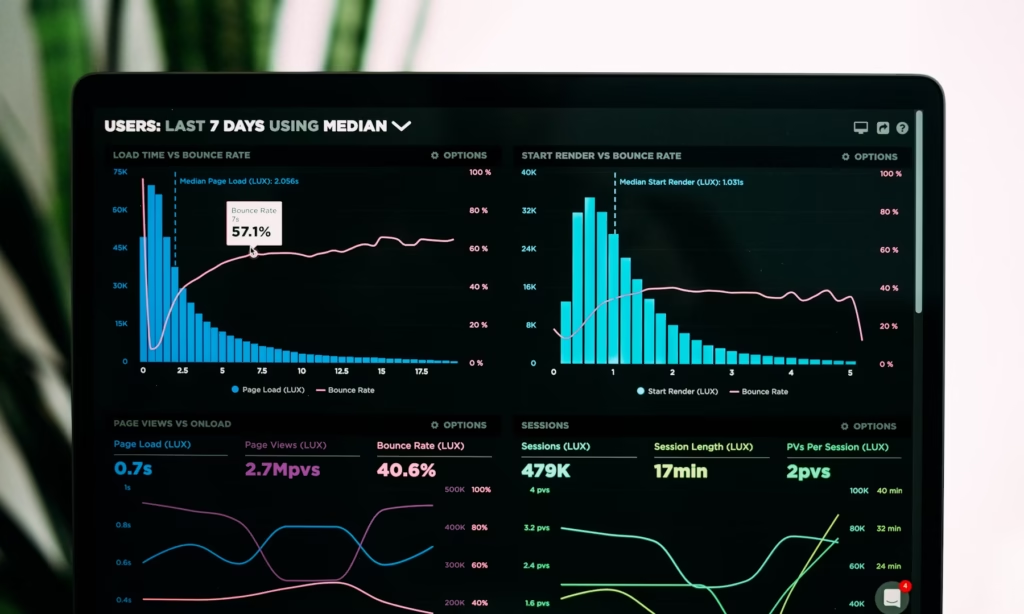
We are in a time where sales managers must deliver results. So, it becomes very important to quantify the performances. Right from measuring the data, analyzing the same through analytics, and tracking the performance of the sales representatives, all these activities automatically becomes key result area of a Sales Manager. Having so much to do, sales managers could easily get off the track in terms of measuring the metrics. Therefore, the smart move in pharma industry is to use MR reporting software for measuring these metrics. A Look at the Competitive Side of Pharma Industry Today’s pharmaceutical industry is extremely competitive. It is not only about the significant budget targets that are on stake but also about targeting the right physicians, patients, and competitors. Pharma sales managers must remain attuned to sales force activities that are being performed on field by sales professionals for a better market coverage. While covering the market or specific areas, sales professionals generally face a number of challenges that must overcome no matter what goes at stake. Here is What Happens when Managers Look at the Right Metrics HERE IS A LOOK AT THE METRICS FOR PHARMACEUTICAL SALES MANAGER TO TRACK Sales Funnel Leakage No pharmaceutical sales manager would ever like to come across a leaky funnel but it is quite obvious for him to experience the same. So, it’s imperative to know where the holes are, how they occurred and what can be done to seal them. So, the things that should be reviewed include: Lead response time: the quick response always improve the chances to win it. Rate of follow up contact: continue follow up with the lead is as important as selling the services. Keep in mind to talk to the clients on emails or call for regular follow up. Sales Forecast Accuracy Forecasts can never be exact but there are tools that can give a look of the trends that may prevail further. The accuracy of sales team forecast depends upon a number of factors in order to either ensure that they are continually reaching their predicted targets or at least reaching close to them. Producing accurate forecasts ensures that the company reaches to their estimated sales target well on time as estimated earlier. Client Acquisition Acquiring new customers in pharma (for medical representatives that is mainly acquiring new doctors) is never the same. There are a number of metrics that play prominence when medical representatives visit either doctors or pharmacies. Medical representatives must find ways to improve their sales with the help of tools like software for pharmaceutical companies and MR reporting software. These tools can offer a suite of information to pharma sales representatives in order to gather the most authentic information about the demands of the pharmacists or doctors in any particular area. Lead Conversion It is important to have the information on how many leads are getting converted into customers. It is one of the most important metrics of the sales pipelines for professionals engaged in the process. A sales team invest a lot of time as well as efforts in fetching a client to the company. Conversion of the lead also signifies the profit that will come along with it. Advanced business intelligence software could play a significant role in determining even the acute needs of their clients and serving services similar in accordance with the demand. Employee tracking Whether the employees are working on field or not is one of the most important concerns for sales managers. And to verify the same, sales manager could use pharma app. Through this app, the managers could allocate different regions to their MRs to cover in a day along with gathering all the related information about the same. This app could also play a significant role in providing all the required information to the sales representatives about doctors, brands to be promoted, date of visit, location, timing , and every other minute information. This will ensure that the professional would invest their efforts in the right direction. Product Performance In Terms of Market Context As soon as a product is launched every pharmaceutical sales manager/company needs to create a market for the same.. Track of Win Vs Loss Rate There are times when pharma sales representatives unfortunately don’t get their prospects converted into lead. Such cases give insight into the reasons of failure that was the prime cause. This also gives enough reasons to understand why leads didn’t buy the services. Such information is crucial as it can assist in improving the closing rate of a company thus helping it to generate improved market share from existing clients. Retention and Churn Rate There are fair possibilities for a pharma sales professionals may lose clients one after another. This is a critical figure to measure as it helps to know about the loopholes in the system. The managers could easily track the ratio with pharma software. Measuring the retention rate on the other hand helps to know the percentage of loyal clients that business has earned over the years. Engagement with Current Customers Relationship with clients is the best way to help grow a brand successfully in the market. Keeping in regular touch with the clients (in this case with physicians) let’s medical representatives know more about the specific demands of an area in terms of requirement of particular drugs. These representatives could separately be held responsible by the pharma sales managers to collect all the field data with the help of MR reporting software. They could be sent for collecting on field data by scheduling their meetings with physicians on particular date, time, and venue to get insights of the field data. This helps to know more about the demands and the supply could be arranged accordingly. Activity Goals Vs Activity Results This helps to identify how sales representatives are performing over a period of time. This gives insight to measure the success rate of the tasks that are being given to the professionals. This also helps